Tax avoidance may seem attractive to high-earners, but tax evasion is a problem for all. Imagine, for one moment, an individual earning millions of US dollars. That same individual may understate income to deceive and defraud officials, with the aim of paying less tax; also known as, tax evasion. There needs to be a system to deal with these issues. This paper argues that an electronic payment system, which records all card and cash transactions, can help officials with evidence of income through expenditure-tracking and, eventually, a better tax collection system.
First of all, what is an electronic payment system and what does it look like? It is simply a system that utilizes cards and electronic devices to store and record all transactions. A person will be issued a card, kind of like a debit/credit card. The card will be scanned through a device with the amount of any transaction. This device will be shared with government officials, making for a better understanding of income earned for tax purposes.
Secondly, what are the benefits of the system? Electronic payments increase transparency and allow for less fraud and evasion to occur. This system also allows for cash payments to be traced, making them more useful for the stated purposes than credit or debit cards. Overall, it is the perfect system. Almost, there are, however, pitfalls of the system to address as well.
Naysayers of increased transparency will point to corresponding decreases in privacy and freedom. If people cannot buy anything without the government knowing, then what else is there? This is a fair concern. Having said that, it is a citizen’s duty to pay tax once they earn a taxable amount. Tax avoidance measures are still legal, but tax evasion is criminal, detrimentally affective to those in need and just wrong.
In conclusion, electronic payment systems can aid in tax-collection efforts. They are systems designed to record all transactions an individual makes. They aid in greater transparency efforts. Finally, they may be anti-privacy but they are also essential without being too intrusive. With the absence of a better system, governments should steamroll this immediately and enjoy heightened tax reserves.
This is an age-old question that defines the trajectory of many people’s lives. Granted you make some dough, you will need to ask yourself whether you should spend, save or invest. I’m going to make the case that you should do all three, strategically.
Spending ensures that you maintain a high quality of life. It involves things like buying food, paying for utilities and purchasing entertainment products. You can’t live your life as Uncle Scrooge, or else you will never enjoy what life has to offer. It’s important to also not that spending too much can result in you filling for bankruptcy and suffering in the long-run. That is why you should also save and invest.
Saving is more like a safety plan you put in place for your financing. You do not know if you’re going to wake up to a rainy day. So, it’s advisable to have something saved. This is in case anything happens. We all may know what it’s like to spend to zero, so don’t put yourself in that position by not saving. Some expenses, like paying for your kids’ college fees, buying a house or things of that nature can only be done by a lot people by saving. You need to ensure you can flex your financial might when you need to most. Saving is the key to doing just that.
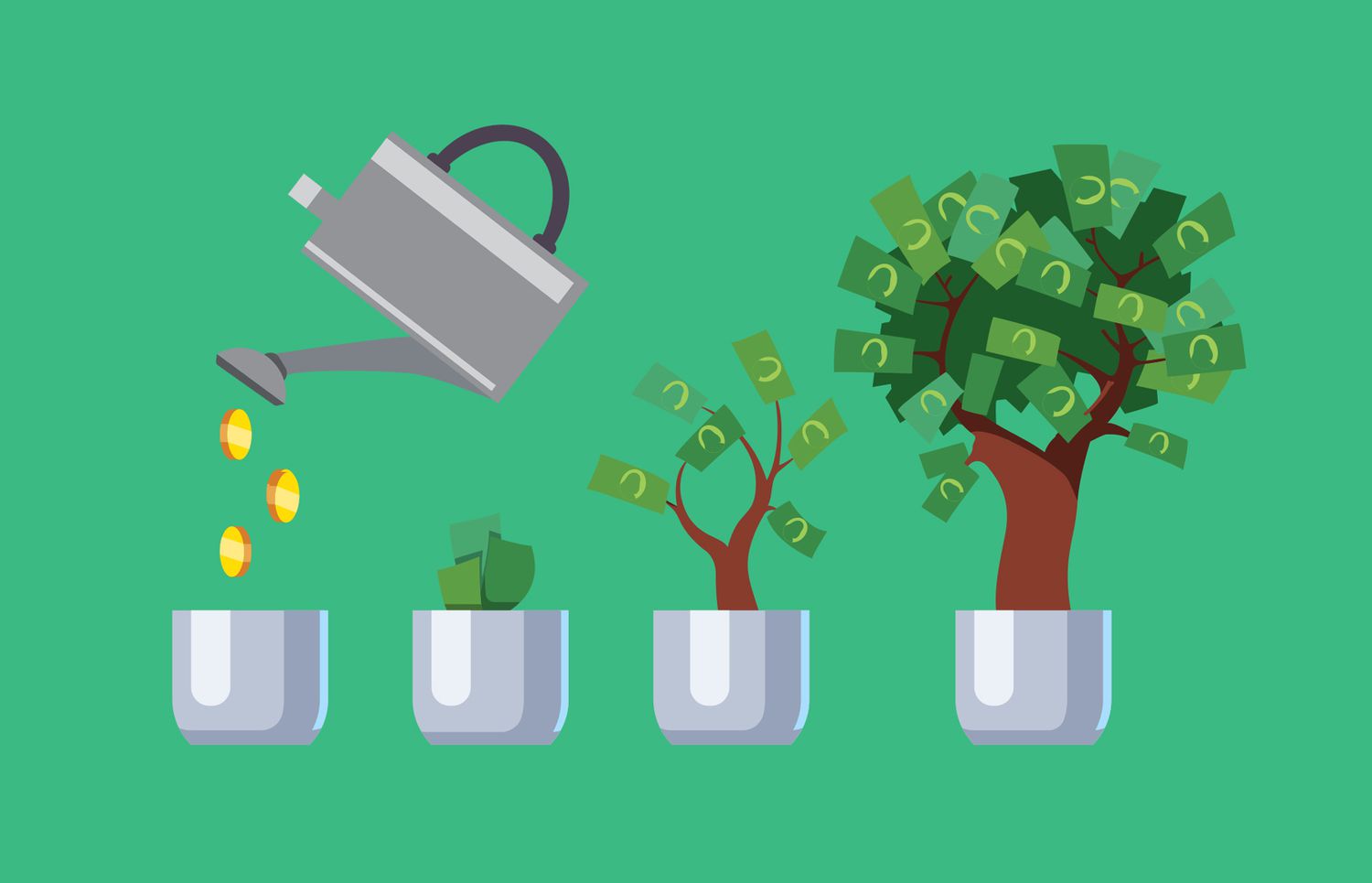
Finally, the number-one area of financial activity should be investment. This, however, is not the case as there are those who live pay check to pay check. Don’t be discouraged if you are among them. There are many low-capital ideas you can invest in in order to gain a return. One of those is starting some online businesses. If you only have to pay for the website, like in a drop-shipping model, then by all means go ahead and invest in that idea. Some larger investments could be buying many shares in a public company, buying a house or starting a business with high capital needs.
A fourth financial option I would like to stress is giving. Sometimes, you may have so much that you can help other people out. Charitable donations are a great way to positively impact society and feel great at the same time. You do not always have to give cash to others. Sometimes doing things, like building a homeless shelter, can be great ways to make a difference.
That is all I have to say on the topic for now. I will like to hear your thoughts on it. What do you think we should do with the income we earn? Would you focus on one more things in expense of others? What kind of impact are you looking to make? You can answer some or all of these questions and more in the comments section. Please like, comment on and share this post so that I can keep blogging about things that I think matter to you.
We’ve all felt low or down before. A lot of that could have been done with a decline in confidence. Feeling good about your abilities is a highly-significant area of life. The benefits are numerous, such as being able to impress other people in your line of work, taking care of yourself and your appearance and relating well with others. You can also feel great if you adopt a more confident approach towards yourself, your attributes and life in general. Having said all that, how can you raise your confidence levels if they are low? This post will deal with just that question.
Positive Thinking
You can become more self-confident by thinking positively. This helps because you will start seeing the bright side of things and develop a better image of yourself as a result. Just think about. If you are thinking in a positive way, then your thoughts about your self will also be positive. This is a sure-fire way of boosting your self-confidence levels.
2. Be Assertive
Having respect for other people’s opinions as well as your own is another way to boost your self-confidence. You can do a lot of damage by being passive and having no respect for your own opinions and voice. It is also possible do damage your relationships and, in turn, your confidence levels by being aggressive and having no respect for others.
3. Adapt a Learning Mentality
It is really hurtful when you bite off more than you can chew, only to fall on your backside. You should, therefore, aim to learn as much as possible. Don’t be over-confident (more on that later), and expect to do it all with little work, effort or individual input. That is a recipe for disaster and can wreck havoc on your confidence levels.
4. Be More Accepting of yourself and your Life
Sometimes, negative self-talk is all that is needed to ruin your day. Try to keep a listening ear to what you say to yourself. All mistakes are unavoidable, so don’t be too hard on yourself if you slip up sometimes. Aiming for excellence is admirable and achievable, but we are not perfect and have to admit to our mistakes.
So, there you have four ways to raise your self-confidence levels. I hope you found this blog post interesting and useful. We all suffer with problems at times, and it’s important to find the right tools to pick ourselves up and press on. As Dory, from Finding Nemo and Finding Dory, said, “just keep swimming.”
So, I’m really excited. I have a new free book promotion going on for many of my stories and collections. You can get a copy of Family Day, Four Very Different Short Stories and many more of my works for free in the next few days. Here is the link to my works on Amazon where you can find the books (please note that my author name is Mahmoud Suleiman Abdi Dualeh):
It’s important to note that this will expire soon, but there will be more free book promotions in the coming months. You can also choose to support a struggling artist by buying the book at another time, ; ). At any rate, I’m so grateful for all of your support and wish you can see how happy your engagement makes me. I’ve gotten good and bad ratings for my writing, but I appreciate all of them. I can learn from the bad ones and hone my skills, while the good reviews give me the fuel to keep pressing on. At the end of the day, you are what makes my chosen careers worth it.
What a great last day of the season it was, I truly enjoyed it. Man City trashed Everton 5-0. Liverpool and Chelsea made it to the top four, although Chelsea did lose to Aston Villa on the Last Day. Arsenal won their game comfortably, but did not make it into Europe. The game of the matchday, however, was between Leicester and Tottenham. They two squared off, both needing to win to make it to their respective European competitions. Leicester was vying for a Champions’ League spot and Tottenham was eyeing a place in the new UEFA Europa Conference League.
At one point in the matchday, Arsenal were winning their game against Brighton and Tottenham were losing to Leicester. As things stood then, Arsenal were on their way to the Conference League and would have finished above Tottenham for the first time in a long while. As a Gunners’ fan, I am gutted that that did not end up happening. Tottenham did indeed beat Leicester. That put them above Arsenal and into the Conference League.
Leicester’s loss also saved Chelsea’s blushes, as the latter lost to Aston Villa and were vulnerable of not qualifying for the Champion’s League. Leicester, however, have something to celebrate this season, with their FA win paving the way for a successful year. The will undoubtedly make it into Europe in the near future.
As for Man City, Aguero scored twice in what was his final Premier League match. Coach Pep Guardiola said that he is likely to go to Barcelona. This will be great news for the Catalans, as they look to improve from what was a dismal season by their standards.
Kane also won the golden boot, having scored on the final match day against Leicester. He joins legend Alan Shearer as the players with the second-most number of golden boots in the Premiere League. They only trail Arsenal hero Thierry Henry, who is world-class by anyone’s standards.
With all that said, the season is now over. If the next season is as tantalizing as this one, then we should be in for a ride.
We all want to operate at our productive bests, but why is it such a hassle for so many of us to achieve this? There are many stumbling blocks to productivity, as well as ways to ensure that we become more efficient at what we do. I will discuss seven such ways in this blog post.
Mornings are your best friend when it comes to productivity: You should aim to do most of your work before noon. This is because the morning is the time your brain is operating at a higher frequency. You can accomplish a lot. However, many people use the morning to make a to-do list of the countless of the things they want to accomplish in the day, drink a lot of coffee or just check social media and their email. These are poor ways to start off your day. You should ensure you eat well in the morning, relax/exercise and start doing real work when your brain is at its best.
Follow the 80/20 rule: You probably heard that 80% of your results come form 20% of your effort. If you have an idea of what you want to accomplish and go about accomplishing it, you will be better suited to devote most of your effort to results-bearing activities. You should aim to be as efficient and effective as possible, not just hard-working. A lot of people think that to be more productive they need to simply do more, but productivity means, “doing or achieving a lot : working hard and getting good results,” (according to Merriam-Webster). So, hard work is only half the battle. Results are the other half.
The Eisenhower Matrix is also handy when trying to be more productive:
My Dad told me about this matrix years back. I wish I had followed it more because it helps you be more productive. Basically, you should categorize your tasks in important/not important and urgent/not urgent categories. Those that are urgent and important are those that you should do, important and not urgent things should be planned, urgent and not important tings should be delegated and not urgent and not important things should be avoided or eliminated altogether.
4. Make a schedule where you are working for several hours a day: You should aim to work every weekday. This will allow for productivity to become second-nature to you.
5. Take more breaks: While working hard is great, it is also important that you avoid burnout resulting in less productivity in the future. Steady does it, as the saying goes. You should be productive, but part of that is to take breaks and ensure that your mind is fresh to bring about greater results in the next work session.
6. Break up tasks into more manageable pieces: Have you ever tried to accomplish a big task only to stare at your computer screen and not do anything? I know that feeling. The reason that happens is that what you are trying to achieve is simply to big. You should, therefore, break it up and accomplish the more manageable pieces. Every task complete will give you a sense of accomplishment, fueling you to finish the full project, job or assignment.
7. Limit the time you spend on social media and your email: Social media is a really addictive beast, but you need to conquer it if you want to become more productive. A lot of time is wasted on social media, checking your mail and just twiddling your thumbs. It’s important that you are aware of that and try to change that bad habit.
There are the seven ways to become more productive. I hope you found this useful and that you give this post a massive like, leave a comment and follow my blog.
I wanted to help people reach their full business potential, so I started a new accounting firm! This firm is called Mahmoud Suleiman Abdi Dualeh, after my name. I will be helping people with their financial statements, tax strategy and other matters. My ultimate goal is to see their business expand to a degree where it’s mature and self-reliant. Here is the link to my page on LinkedIn:
Please visit the page and follow it if you are on LinkedIn. I would appreciate the support. If you are a business owner/manager, then please let me know if you need my services.
Whether it’s a story from life, a piece you did a lot of research about or one that was told to you first-hand, it’s important to be familiar with what you are writing about. I know this from personal experience. Having published and self-published many short stories, the one that fared the best was a story about my youngest sister’s tricky birth called The Hazardous Delivery. The other stories were alright, but lacked that personal touch which makes a work stand out. In this post, I’ll explore the reasons why you should write about what you know.
First of all, writing about what you know is a great way to make a story successful because you have a lot of material to include in your final work. You simply know more about topics you are familiar with. For that reason, you should try to create fiction and non-fiction pieces about them and share your wealth of knowledge with your readers.
Secondly, something that happened in your life carries more emotional weight than something that you saw on the news. Which of the following would you prefer to hear: a story about WWII from a high school student or a memoir about the struggles of being a jet fighter in WWII from a 98-year veteran of the war? I’m sure many of you would choose the latter. I definitely would!
You might be thinking, what if my life is simply not interesting enough to write about? I would say that I am certain that is false. Everyone has a great story to share. Whether it is the experiences of your loved ones, your own struggles and triumphs or something that effects you in society, you definitely have a story others want to hear about. If you are feeling practically unsure about others’ interest in your life, then try to be on the look-out for juicy stories which will interest others. A good writer always has her or his attention on interesting stories in their lives.
Additionally, you should write about what you know because that will be the most genuine form of writing. If you are a computer geek who is writing about how cool it is to a high school football star (when your school has no football team), most people will not be able to connect with you on a personal level. If, however, you write about gadgets and other things in your life, then many people can learn a lot from you and that will translate into more book success.
I would like to make it clear that I personally believe in all of your abilities to enjoy writing success. Having said that, there are certain things we all need to learn and improve on in order to be the best writers we can be. I have another post on writing with the end in mind. That’s a little trick that helped writers like J. K. Rowling and other bestsellers. I personally think that this piece of information (writing about what you know) is equally important and can help make your work seem more authentic.
Finally, writing about what you know makes you a more credible, authoritative and relevant writer. This is especially important for non-fiction and academic writing, but also, funnily enough, for fiction writers. We all want to hear something that people are knowledgeable about. Who will pay $10 for a book from an author who does not know what he or she are talking about? No one is the answer. Now, you need to ask what are you most knowledgeable about. The answer is things you have studied, experienced and generally occurred in your life. That is what you know; that is what you should be writing about.
In conclusion, everyone who aspires to be a writer should write about what they know. This is because you know more about what you know, obviously ; ), what you know carries more emotional weight than what you do not know about and writing about what you know makes you more genuine in your writing approach. Finally, it helps to know something to come across as credible, authoritative and relevant in your writing. I hope you found this post useful. It will go a long way for my blog if you like, share and comment on this post.
No one has a crystal ball that allows them to see into the future. While that’s true, it’s important to be forward-thinking when it comes to your career. There are many ways to look at the future you. Do you want to be a footballer? Maybe, you want to start a career in film-making? More likely, however, you will start a more practical, realistic career in a multitude of fields (more on this later). I want to talk about how important it is to envision yourself ten years into the future in order to start planning from now.
I find that a lot of people have dreams, if not fantasies, of making it big in sports or entertainment. While it’s great that you want to be the next Lionel Messi, Beyoncé or whoever, I think that dreaming of being a sports or entertainment superstar may sometimes be a waste of time. This is true when you do not possess the talent to match your dream. If you can sing like Whitney Houston or Mariah Carey, then by all means pursue a career in music. If, however, you sound more like William Hung (from American Idol infamy), then you should shelf that career prospect in line with something more realistic.
There are many different careers that you can pursue. You can be a doctor, lawyer, actuary, project manager, accountant, finance professional, engineer, programmer and so on and so forth. Like entertainment careers, you need to possess the talents, skills and abilities to do well in these careers. Luckily for us, we are all talented at something. The key is to match what you’re good at with what you do.
Growing up is not all about choosing a line of work. You also have to make decisions about whether you want to start a family, your finances (which is admittedly work-related again) and how you will see to your health without the aid of Super Mom or Super Dad (that is to say, how you will remain or become healthy on your own as an adult). Let’s start with the prospect of having your own family.
First of all, this decision is shared with you and a potential spouse/partner. You have to find someone to share a life with and then make big decisions, like the number of kids you want to have or if you want any at all. I find that kids are the joy of life, but many people are opting to be childless for their own reasons. This decision is tied with financial security and independence. It’s difficult to start a family without adequate finances, and a lot of people fail for that reason.
Financial health is all about having enough to meet your needs and a healthy dose of your wants. More than just being independent, you can be prosperous! Being an adult has a lot to do with making decisions and investments that see you standing on your own two feet. Things like shelter, food, clothing, water, electronics, vehicles, etc. are all items that require financing to acquire. How will you be able to purchase those things and more without a career, your own business or any other mean of earning an income? Looking into the future and choosing a career can help you gain more clarity with regards to your money concerns.
Finally, health is a big area of life to consider. Whether you only have had to deal with the odd headache or have a chronic illness to manage, you should take the necessary steps to ensure you are healthy for the foreseeable future. Things like exercising, eating a healthy diet and taking medicine (if needed) are great ways to ensure that you become/remain healthy.
So, there you have my understanding of how to envision the future and help yourself grow-up. For more info, you can do your own research on this subject or ask me questions in the comments’ section. I’m all for a communal push to self-improvement, so please ask away! Please like, share and comment on this blog post. Those actions will go a long way in spreading the word for those in need. It will also help me out in having a bigger platform to share my idea, research and work : ).
If you are an experienced business professional, an aspiring accountant or just a business geek, you probably heard of the Association of Chartered Certified Accountants (or ACCA). It is a great platform to learn how to become more useful to employees, financially sound and competent as well as more entrepreneurial in practice, spirit and knowledge. The world of ACCA is an all-encompassing one. I know from personal experience, having passed several papers on my way to being a member. What I have learnt so far is invaluable and makes me confident that I will succeed as a finance professional and/or business owner.
Having said all that, what do you exactly learn in ACCA. I am going to list the courses and go in-depth explaining as many as I can. I’m currently studying for professional papers, so I’ll share a lot about the papers I have passed already. Here are the courses in the order they appear on the ACCA website:
Applied Knowledge courses
Business and Technology (BT)
Management accounting (MA)
Financial Accounting (FA)
Applied Skills
4. Corporate and Business Law (LW)
5. Performance Management (PM)
6. Taxation (TX)
7. Financial Reporting (FR)
8. Audit and Assurance (AA)
9. Financial Management (FM)
Strategic Professional
10. Strategic Business Leader (SBL)
11. Strategic Business Reporting (SBR)
You also have to take two out of the following four courses, in order to be a member. That is if yo do not take the master’s route via University College London, the University of London, in which cases the first eleven papers plus three extra courses with UCL will suffice in you gaining both a master’s degree from UCL and an ACCA qualification. I am listing the courses for those who only want to do ACCA papers to become a member.
Advanced Financial Management (AFM)
Advanced Performance Management (APM)
Advanced Taxation (ATX)
Advanced Audit and Assurance (AAA)
You also have to complete the ethics and professional skills module as well as the practical experience requirement to gain ACCA membership. Finally, there are a number of partnering universities that you can gain degrees and qualifications from, most notably Oxford Brookes University (where you can gain a bachelor’s in Applied Accounting) and UCL (with the possibility of gaining a master’s in Professional Accountancy, as explained above). The Oxford Brookes degree programme requires that one finishes the first nine papers, that is the Knowledge and Skills Papers, as well as a research project with Oxford Brookes, the ethics and professional skills module and proving that they speak English at university level. There are certain ways to prove this, such as being a national of certain countries where English is widely spoken, doing a number of years of university that constructs its courses in English or passing IELTS with a sufficient score.
The above information should orientate you with the course, but what is ACCA’s ultimate value? That question is answered in many different ways. First of all, in courses like financial accounting and financial reporting, one learns accounting principles, practices and tools that help capture historic financial information. This can then be recorded and presented to stakeholders, people interested in the business. Without this information, the shareholders, or owners, of a company can not know how their company is performing. This leaves them ill-informed and unable to make key decisions.
Additionally, courses like taxation allows one to act strategically with regards to their tax payments. First of all, it should be noted that tax evasion is illegal and should never be practiced. Having said that, one could take lawful means to avoid tax and save more with the aim to invest and earn more in the future. You also cannot know how to pay your full tax liability, the full amount you owe to the government with regards to your or your company’s income/profits, without knowing a little bit of tax accounting. Sure, you can hire a tax accountant but they would need to have done Taxation, or a similar course, to be able to professionally aide you.
Those are just some ways ACCA can help you. It is even more useful if you start a career in accounting/finance or want to start your own business. I found myself thinking of countless strategies for business success having passed just a number of papers. Everything from raising finance (which is learnt in Financial Management), investing wisely (also learnt in FM) and enabling a tax strategy to coming from financially aware, keeping an eye on your costing and expenses and earning a profit can be learnt at ACCA. Phew, poor ACCA students is a sentiment I share but what about how great this course will be for them once they are through.
Finally, one of the most important aspects of doing ACCA is the reputation of the body. Once you complete your membership, you should have a host of companies lining up wanting to sign you on board as a processional. You can also eye higher managerial and director roles as you progress in your career. There is just so much to be gained that you should not be deterred in your decision to join as a student, even today!
At any rate, I made my case for why you should join ACCA as best as I could. I hope you found this blog post useful and that you do decide to join the body if you were thinking of being a chartered accountant. Also, if you are a business owner or hiring manager, please consider ACCA members in relevant roles in your company. Trust me, you won’t be disappointed.






 Writers in the Dualeh Family